
Not every step in a business process needs AI. And not every process should be automated end to end.
Before selecting technology, examine what each step is supposed to achieve and whether it needs to exist at all.
Four decisions before choosing the technology
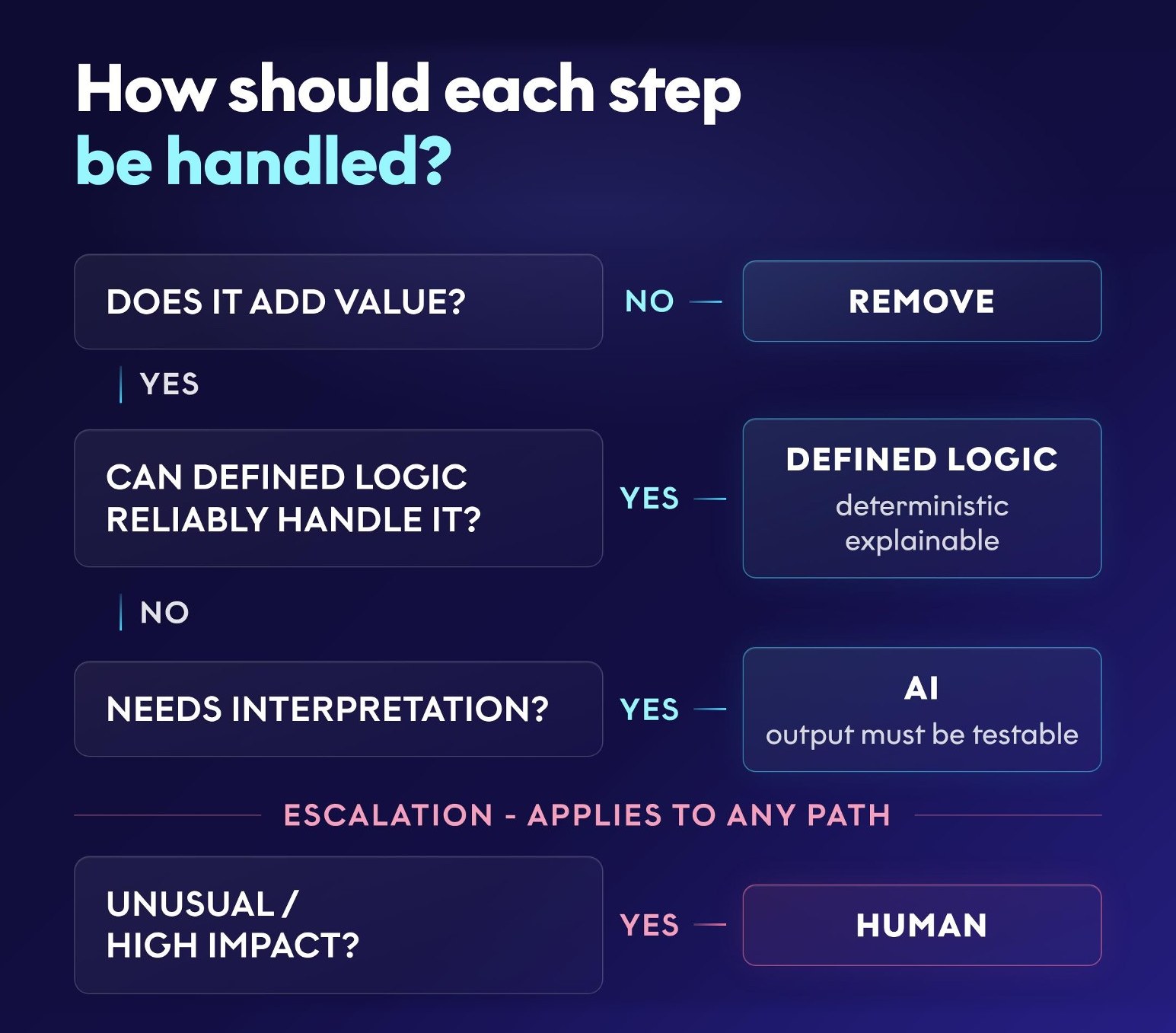
1. Remove what adds no value
Review each step in the existing workflow. Unnecessary approvals, duplicate data entry and redundant handoffs should be eliminated rather than automated.
2. Automate predictable tasks with rules
If clear, deterministic rules reliably produce the desired result, use them. Field validation, calculations, format checks and defined approval conditions rarely need a language model.
3. Use AI where interpretation is required
AI becomes useful when processes involve unstructured documents, natural language or information that requires contextual interpretation.
This includes classifying incoming requests, extracting information from documents and identifying relevant information across different sources.
4. Keep humans responsible for exceptions
Unusual situations, conflicting information and decisions with significant consequences need an accountable human decision-maker.
The system should recognise these cases and route them for review with the necessary context.
A practical example: Document processing
Consider an incoming customer request.
An AI model classifies the free-text message and extracts relevant information. Deterministic rules verify that mandatory fields are present and check the extracted data against business requirements.
If the information is complete and valid, the workflow can proceed automatically. If something conflicts or requires a high-impact decision, the case is routed to a responsible employee.
The important engineering work lies in connecting these steps reliably.
Which system triggers the next action? How are exceptions handled? Who approves a decision? What happens when an integration fails? And how do we verify that the final result is correct?
Architecture before automation
At MNB Solutions, we design automation around the business process, its existing systems and the decisions that need to be made.
AI is one component of that architecture, alongside deterministic logic, enterprise integrations and human oversight.
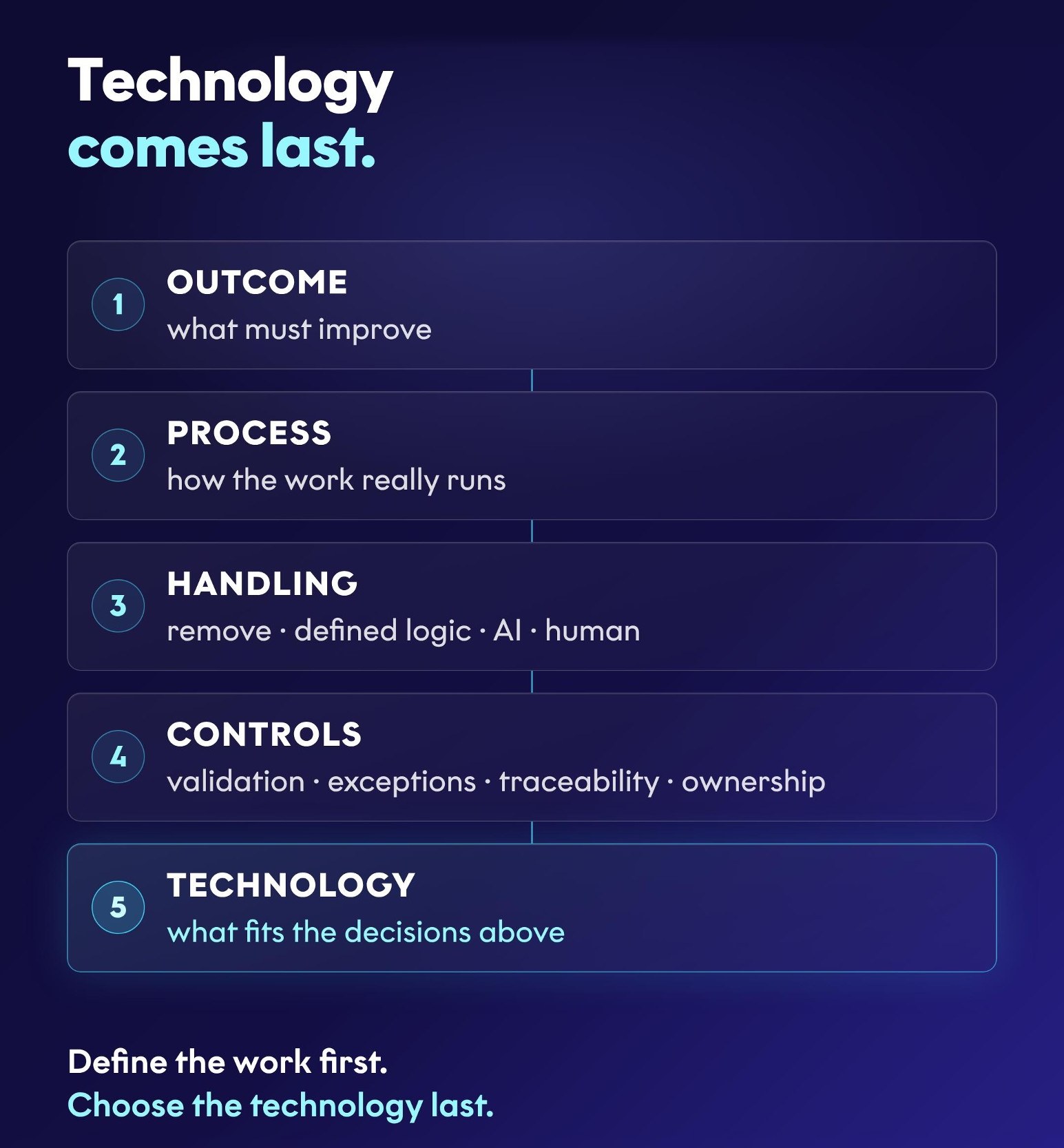
Start with the process and the value it should create. Then choose the technology that does the job best.